Through her observations of the children in her care, Montessori developed a deep understanding of how children learn best: through hands-on, concrete experiences that allow them to explore and discover for themselves. She also recognized the importance of treating all children with dignity and trust, and saw education as a path to peace and understanding.
In the early 1900s, Montessori was asked by the Italian government to create a solution for the children living in the San Lorenzo district of Rome, a poor, inner-city neighborhood with many disadvantaged and previously unschooled children. She established a center called Casa dei Bambini to educate these children, and used her observations of their interests, interactions, movements, and emotions to craft opportunities for them to take care of themselves, the environment, and each other.
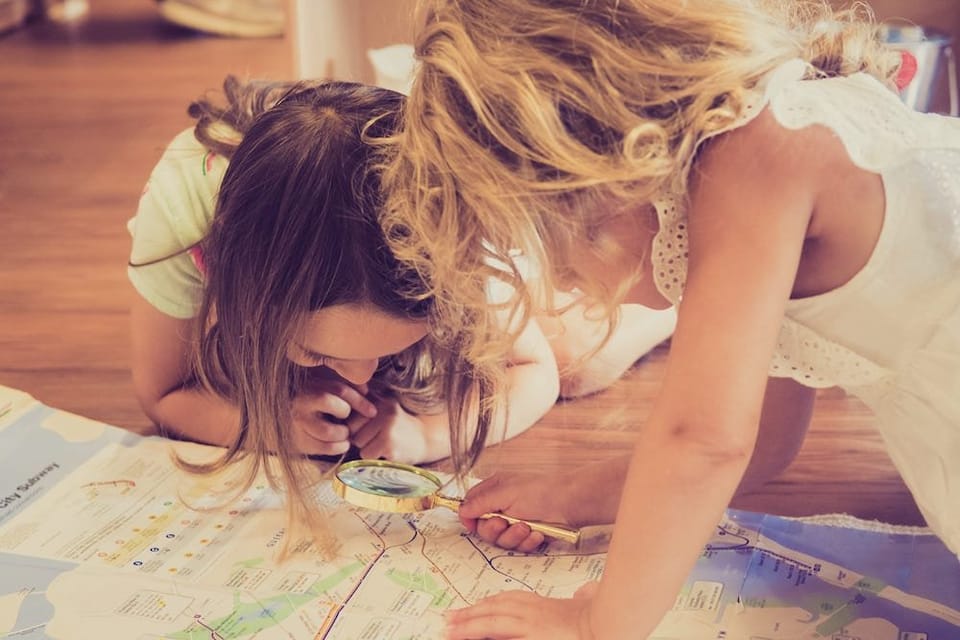
As Montessori’s reputation and educational philosophy grew in popularity, she developed a full range of classroom materials to teach subjects including language, mathematics, culture, and geography. During the 1930s, as Europe was plunged into war, Montessori turned her attention to the role of education in promoting peace. She traveled extensively, talking about peace and educating children, and even met Mahatma Gandhi, with whom she shared a vision for the world.
Eventually, Montessori was forced to flee to India due to the rise of fascism in Europe, but she continued her work and the Montessori method flourished. She returned to Amsterdam in later years and passed away in 1952 at the age of 81. During her lifetime, she was honored with numerous civic and academic awards, including three nominations for the Nobel Peace Prize. Today, her legacy and work continue to inspire and educate children around the globe.
Why Montessori?
MONTESSORI FOSTERS INDEPENDENCE
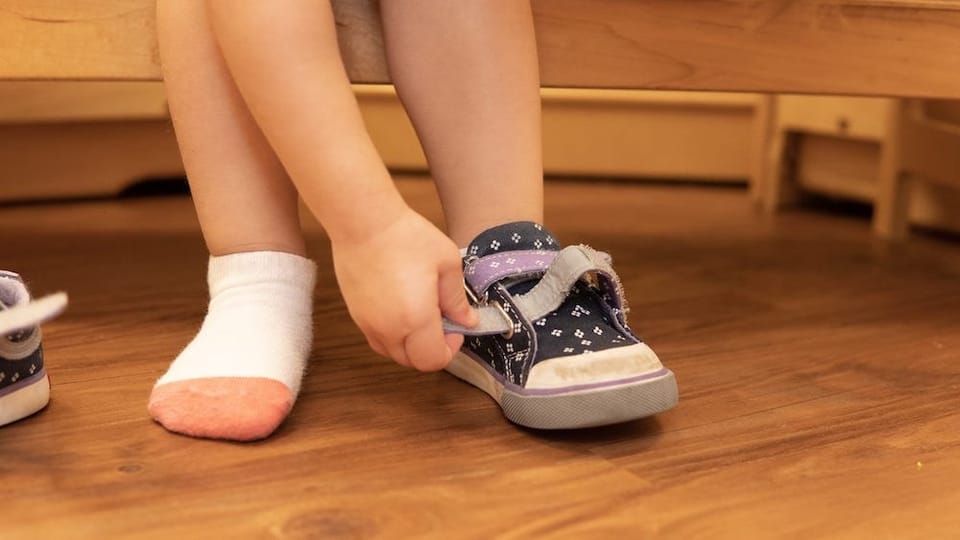
In our schools infants, toddlers, and young children learn that their independence is valued. We encourage free movement, choice within carefully crafted limits, and make sure they know their voices are heard. As children get older, they begin to learn about time management. We teach them practical life skills, such as cleaning and preparing food, that can be used in the classroom, home, and beyond. This emphasis on independence gives children a tremendous sense of empowerment.
WE FOLLOW THE CHILD
This begins by having teachers trained in the specific developmental stages of the children they work with. By honoring where children are in their growth, we can create educational environments that perfectly suit their needs. We know that learning is not always linear, and that each individual child will need different challenges and supports throughout their time at our school. In addition, Montessori students have plenty of opportunities to deeply study areas of personal interest.
BEAUTIFUL CLASSROOMS INSPIRE BEAUTIFUL WORK
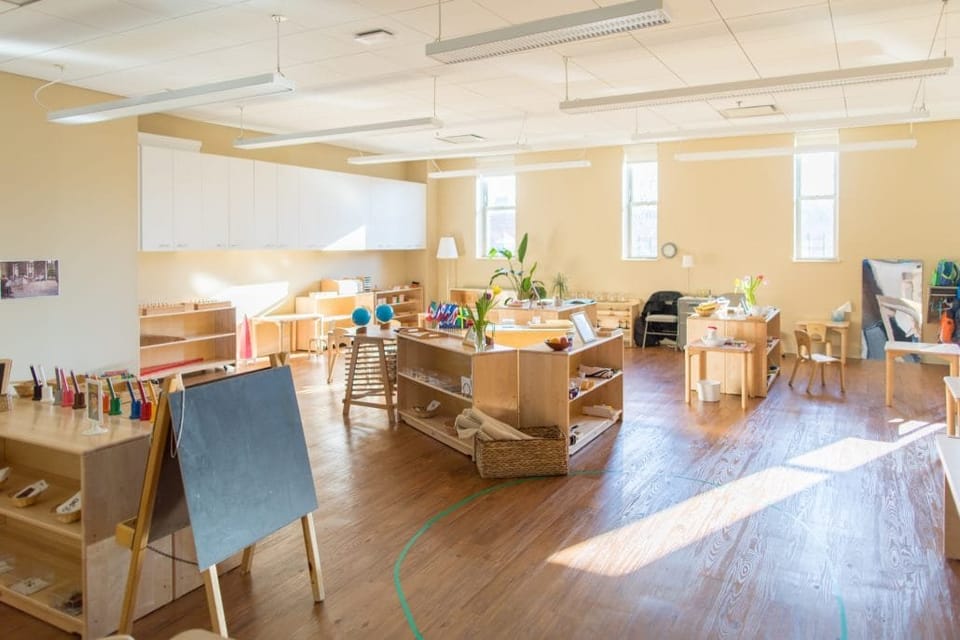
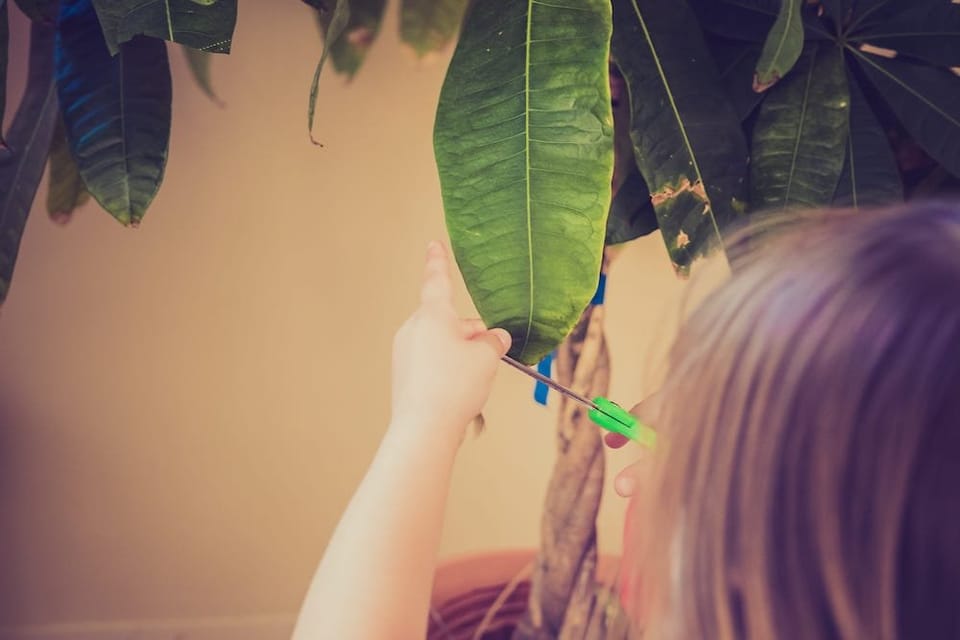
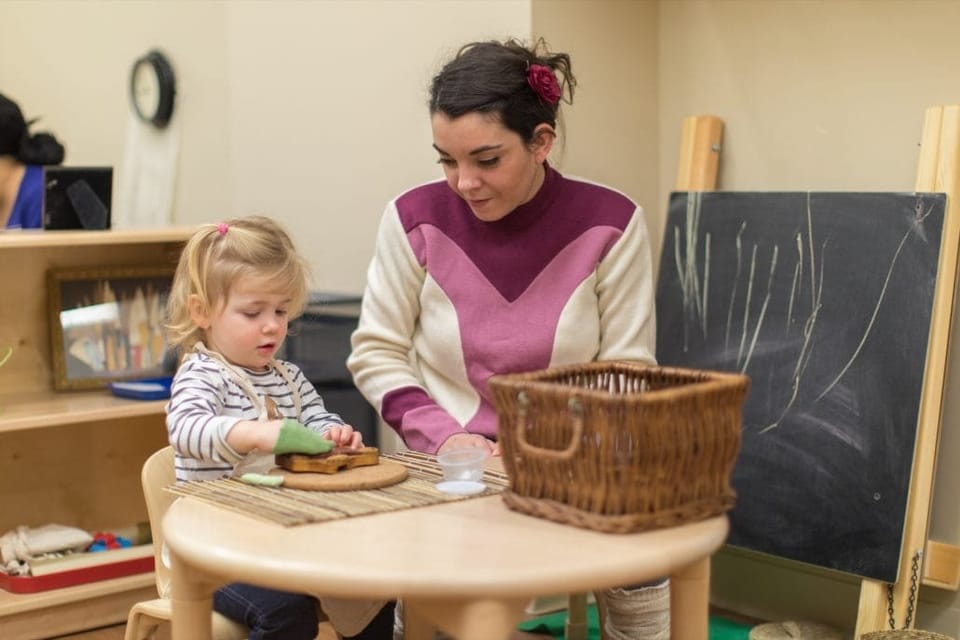
Upon stepping into a Montessori classroom, one immediately sees the difference in our environments. We value natural materials and prefer natural lighting. Living things (both plants and animals) are present, as are low shelves that allow children to easily access their work. There are areas for children to work in a group or alone, and on the floor or in a chair. Materials are of high quality, inspiring the children who use them to make their work beautiful.
NATURE IS INTEGRATED
In addition to the plants and animals that children help care for, our classrooms often have a museum-like quality to them. Depending on what the children are studying, one could find a variety of interesting specimens. Dissected owl pellets, ancient fossils, and sparkling geodes are just a few of the countless possibilities. Natural studies such as botany and zoology begin at the primary level. We also believe it is critical to bring our students out into nature whenever possible, giving them an opportunity to learn and enjoy it firsthand.
WE VALUE KINDNESS AND PEACE
Our students are global citizens. World geography is taught beginning at a young age and children learn about traditions from a wide range of cultures. We take the time to teach skills like conflict resolution, and are able to help children work through social dynamics as they arise. We believe that peace and kindness are the base of any quality education, and a foundation that is necessary for the progress of humanity.
WE VALUE FORMATIVE ASSESSMENT
Assessment is derived from a Latin word meaning to sit beside. In a Montessori classroom, that is exactly what we do. Teachers sit beside children while they work, gathering data as they go. The three period lesson, a Montessori hallmark, is specifically designed to measure understanding and mastery during teaching. Teachers also observe students and take notes, allowing them to target areas in which students may need more challenge or support. Utilizing formative assessments each day allows teaching and learning to be adjusted in the moment, so each child is getting exactly what they need.
Interested? If you think your child would thrive in a Montessori environment, visit our tour page or contact us to find out more. You can also find out more about our programs for 12 weeks through 6 years.
Montessori FAQs
What is the difference between Montessori and traditional education?
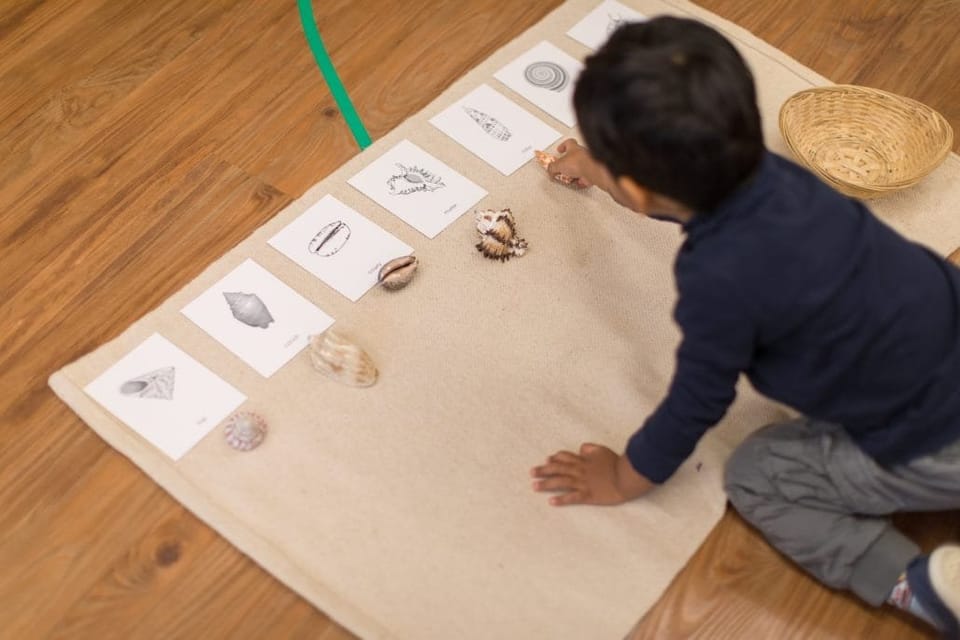
For children six and under, Montessori emphasizes learning through all five senses, not just through listening, watching, or reading. Children in Montessori classes learn at their own, individual pace and according to their own choice of activities from hundreds of possibilities. They are not required to sit and listen to a teacher talk to them as a group, but are engaged in individual or group activities of their own, with materials that have been introduced to them 1:1 by the teacher who knows what each child is ready to do. Learning is an exciting process of discovery, leading to concentration, motivation, self-discipline, and a love of learning.
There is great respect for the choices of the children, but they easily keep up with or surpass what they would be doing in a more traditional setting. There is no wasted time and children enjoy their work and study. The children ask each other for lessons and much of the learning comes from sharing and inspiring each other instead of competing.
Why does Montessori have multi-age classrooms?
Multi-age classrooms afford us the luxury of adapting the curriculum to the individual child. Each child can work at his or her own pace, while remaining in community with his or her peers. In addition, the multi-age format allows all older children to be the leaders of the classroom community even those children who may be shy or quiet.
Is Montessori good for children with learning disabilities?
Montessori is designed to help all children reach their fullest potential at their own unique pace. A classroom whose children have varying abilities is a community in which everyone learns from one another and everyone contributes. Moreover, multi-age grouping allows each child to find his or her own pace without feeling “ahead” or “behind” in relation to peers.
Are Montessori children successful later in life?
Research studies show that Montessori children are well prepared for later life academically, socially, and emotionally. In addition to scoring well on standardized tests, Montessori children are ranked above average on such criteria as following directions, turning in work on time, listening attentively, using basic skills, showing responsibility, asking provocative questions, showing enthusiasm for learning, and adapting to new situations.
Are Montessori schools religious?
Montessori educates children without reference to religious denomination. As a result, our classrooms are extremely diverse, with representation from all peoples, cultures and religions.
Is Montessori a franchise? Who can open a Montessori school?
The term Montessori is not trademarked and anyone, regardless of training, experience or affiliation can open a “Montessori” school. It is essential that parents researching Montessori act as good consumers to ensure the authenticity of their chosen program.
If children are free to choose their own work, how do you ensure that they receive a well-rounded education?
Montessori children are free to choose within limits, and have only as much freedom as they can handle with appropriate responsibility. The classroom teacher and assistant ensure that children do not interfere with each other, and that each child is progressing at her appropriate pace in all subjects.
Montessori classrooms don’t look like regular classrooms. Where are the rows of desks? Where does the teacher stand?
The different arrangement of a Montessori classroom mirrors the Montessori methods differences from traditional education. Rather than putting the teacher at the focal point of the class, with children dependent on her for information and activity, the classroom shows a literally child-centered approach. Children work at tables or on floor mats where they can spread out their materials, and the teacher circulates about the room, giving lessons or resolving issues as they arise.
Are Montessori schools as academically rigorous as traditional schools?
Yes; Montessori classrooms encourage deep learning of the concepts behind academic skills rather than rote practice of abstract techniques. Montessori programs tend to significantly exceed state common core educational standards.